
Many people use the terms port and harbour as if they mean the same thing.
But in reality, they are different and serve different purposes in the maritime world.
Understanding this difference is important for students, especially those preparing for a career in the Merchant Navy.
What Is A Harbour
A harbour is a place where ships can stay safely.
It protects vessels from strong waves, storms, and rough sea conditions.

Simple Meaning
A harbour is mainly for safety and shelter
Key Features
- Protected water area
- Can be natural (like a bay) or man-made
- Used for anchoring and waiting
A harbour does not always have facilities for loading or unloading cargo.
What Is A Port
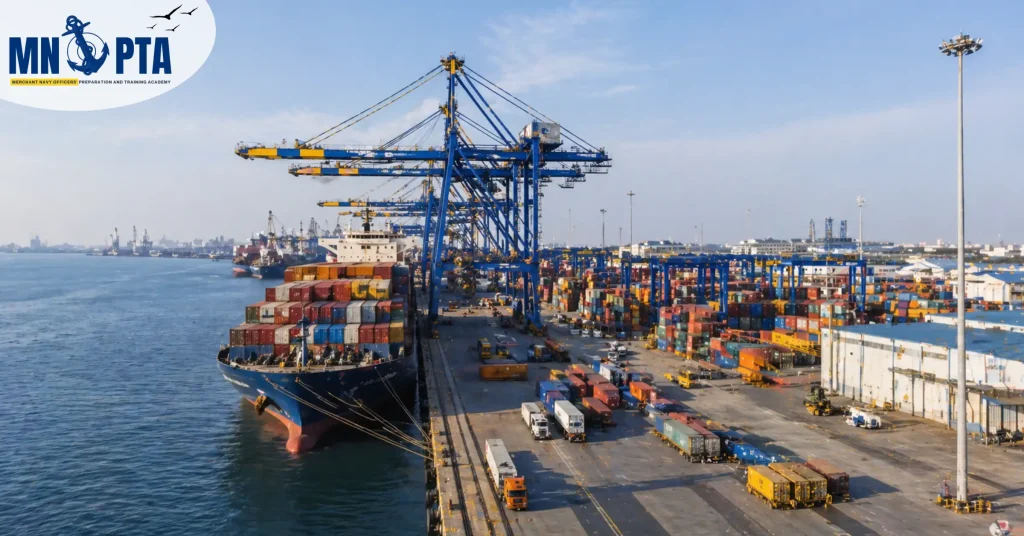
A port is a place where ships come to do business activities.
It is used for loading and unloading cargo, passenger movement, and trade.
Simple Meaning
A port is mainly for trade and operations
Key Features
- Has infrastructure like docks, cranes, warehouses
- Used for import and export of goods
- Handles passengers and cargo
Ports are developed areas with full facilities for ship operations.
Key Difference Between Port And Harbour
| Basis | Harbour | Port |
|---|---|---|
| Purpose | Safety and shelter | Trade and operations |
| Facilities | Limited or none | Advanced infrastructure |
| Function | Protect ships from sea conditions | Load/unload cargo and passengers |
| Nature | Can be natural or artificial | Mostly developed and man-made |
Important Point To Remember
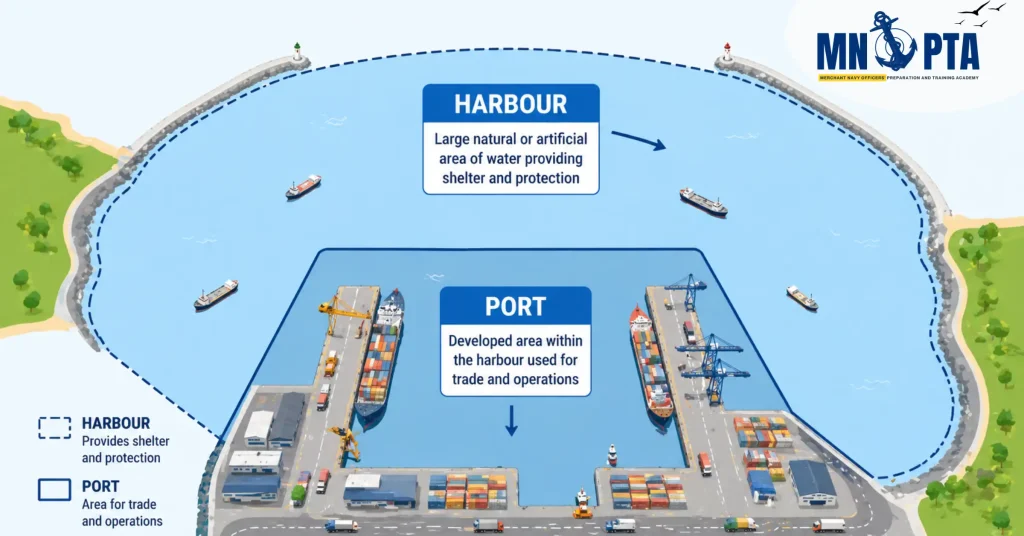
- Every port is usually located inside a harbour
- But not every harbour is a port
This is the easiest way to understand the difference.
Think of it like this:
- Harbour = Parking place for ships (safe area)
- Port = Working place for ships (business area)
If you are serious about building a career in the Merchant Navy and want clear concepts, proper guidance, and exam preparation, you can join MNOPTA (Merchant Navy Officers’ Preparation and Training Academy).


