
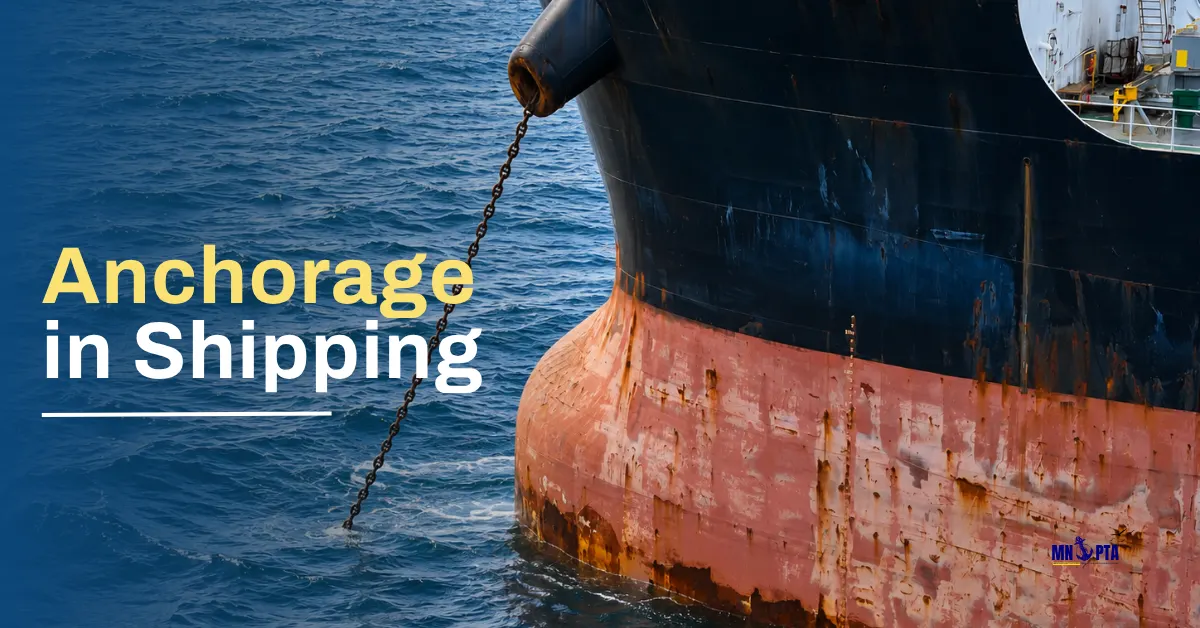
An anchorage is an area of water where ships can safely drop anchor and remain for a period of time. It is commonly used when a vessel has reached a port or coastal area but cannot proceed immediately to a berth. The ship may be waiting for berth availability, a pilot, favourable tidal conditions, port clearance, cargo instructions or simply its scheduled time to enter.
The simplest way to understand anchorage is to think of it as a designated or suitable area for ships to remain at anchor. Unlike a vessel at berth, which is normally secured alongside a quay, jetty or terminal using mooring lines, a vessel at anchorage remains in open water and is held primarily by its anchor and anchor cable.
An anchorage may be located inside a harbour, close to a port entrance or several miles offshore. Its location depends on water depth, seabed conditions, vessel traffic, weather exposure and the layout of the port.
Why Do Ships Use an Anchorage?
A ship reaching its destination does not always mean that it can immediately proceed alongside. Commercial ports handle multiple vessels at the same time, and berth schedules can change because of cargo delays, weather, tides or the late departure of another ship.
Suppose a bulk carrier reaches a port at 5:00 AM, but the berth allocated to it will not be free until noon. Keeping such a large vessel underway near the port for seven hours would be unnecessary and inefficient. Instead, the port may direct it to an anchorage where the vessel can safely drop anchor and wait.
Berth congestion is one of the most common reasons ships remain at anchorage, but it is not the only one. Deep-draught vessels may have to wait for a suitable tide before entering a channel, while another ship may be awaiting a pilot, immigration clearance or instructions from its charterer. Tankers and bulk carriers may also remain at anchor while commercial or terminal arrangements are completed.
For this reason, calling anchorage simply a “waiting area for ships” is useful for beginners but incomplete. Waiting is common, but the defining feature of an anchorage is that it is an area suitable for a vessel to remain at anchor.
How Does a Ship Anchor at an Anchorage?
Anchoring is a planned navigational operation. Before reaching the anchorage, the bridge team studies the chart, available water depth, expected weather, seabed characteristics, nearby vessels and the amount of space available for the ship to swing.
As the vessel approaches its selected position, its speed is gradually reduced. When the ship reaches the required location, the anchor is let go and a suitable length of anchor cable is paid out. The anchor settles into the seabed and, together with the weight and shape of the cable, provides the holding force required to keep the vessel within its anchoring area.
The amount of cable used is not the same in every situation. Water depth, wind, current, sea conditions, the vessel’s size and available swinging room all influence the anchoring arrangement.
Once the anchor is holding properly, the ship is said to be brought up at anchor. This does not mean the vessel becomes completely motionless. A ship at anchor normally changes its heading and position as the wind and current act on it.
Why Does a Ship Move While at Anchor?
An anchored ship is connected to a fixed point on the seabed by its anchor and cable, but the ship itself can move around that point. As the direction of the wind, tide or current changes, the vessel may swing around its anchor.
This movement creates what mariners commonly refer to as a swinging circle.
The amount of space required depends on the length of anchor cable paid out and the dimensions of the vessel. A large ship using a considerable length of cable can cover a substantial area as it swings, which is why ships at an anchorage cannot simply anchor very close to one another.
The bridge team must also consider nearby shallow water, traffic routes, wrecks, pipelines, submarine cables and other navigational hazards. A position that looks clear when the anchor is first dropped may become unsafe if the vessel later swings towards a hazard.
What Makes an Anchorage Safe?
A suitable anchorage needs much more than enough space on the chart. One of the first considerations is water depth. There must be enough water beneath the vessel throughout the anchoring period, taking the ship’s draught, tidal variation and required under-keel clearance into account.
The nature of the seabed is equally important because the anchor must be able to develop adequate holding power. Mud, sand, clay, rock and other seabed conditions do not behave in the same way, so navigators use nautical charts and local information to assess the expected holding ground.
Space is another major consideration. The anchorage must allow the vessel to swing without coming dangerously close to other ships or hazards. Weather exposure, current strength and the possibility of deteriorating conditions also matter because increasing wind or current can place much greater loads on the anchor and cable.
A good anchorage therefore combines suitable depth, reliable holding ground, adequate swinging room and acceptable protection from prevailing conditions.
What Happens While a Ship Is at Anchorage?
A ship at anchor is not simply parked and forgotten. The bridge continues to maintain an anchor watch and monitors whether the vessel remains within the expected anchoring area.
The ship’s position can be checked using GPS, radar, visual bearings and other navigational methods. Officers also monitor wind, current, weather forecasts and nearby traffic. Particular attention is paid when conditions deteriorate because an anchor that was holding securely in moderate weather may behave differently under much greater load.
One of the most serious concerns is dragging anchor. This occurs when the anchor loses sufficient grip on the seabed and the vessel begins moving away from its intended position. If not detected early, the ship could drift towards another vessel, shallow water or a navigational hazard.
The crew must therefore be prepared to respond if the vessel starts dragging. Depending on the circumstances, this may involve paying out more cable, using the engine, weighing anchor or moving to another position.
Can Ships Carry Out Operations at Anchorage?
Yes. Although many vessels use an anchorage primarily while waiting, certain operations can also be carried out there.
Ships may receive bunkers, provisions or stores while at anchor. Crew changes and inspections may also take place when local regulations and weather conditions allow. In some sectors of shipping, cargo may be transferred between vessels through ship-to-ship operations, while lightering may be used to transfer part of a vessel’s cargo before it proceeds to a berth or shallower water.
These operations require additional planning because the vessel does not have the direct shore access and fixed infrastructure normally available at a berth.
This is another reason an anchorage should not be described merely as a place where ships “do nothing while waiting.”
Anchorage vs Berth: What Is the Difference?
Anchorage and berth are closely related to port operations, but they describe very different situations.
| Anchorage | Berth |
|---|---|
| An area where a vessel can remain at anchor | A specific position assigned to a vessel |
| Ship is primarily held by its anchor | Ship is normally secured with mooring lines |
| Vessel remains in the water away from a conventional quay | Vessel is commonly alongside a quay, jetty or terminal |
| Often used while waiting | Usually used for terminal or port operations |
| Vessel can swing around its anchor | Vessel is held in a defined position |
| Direct shore access is generally unavailable | Direct access to terminal facilities is normally available |
A vessel might therefore arrive near a port, proceed to anchorage and wait several hours before being called to its berth. Once the berth becomes available, the ship weighs anchor, proceeds towards the terminal and is eventually secured alongside.
However, not every ship has to anchor before berthing. If the berth is available and the port is ready to receive the vessel, it may proceed directly alongside.
Is Anchorage Always Outside a Harbour?
No. This is one of the most common misconceptions about the term.
An anchorage may be outside a harbour, but it can also be located within sheltered harbour waters. Large ports may have several designated anchorages for vessels of different sizes, draughts or operational requirements.
What determines whether an area is an anchorage is not whether it lies “inside” or “outside” the harbour. It is whether the area is suitable or designated for vessels to remain safely at anchor.
Anchorage, Anchor and Anchoring: Do They Mean the Same Thing?
These words are related, but they should not be used interchangeably.
An anchor is the equipment used to secure the vessel to the seabed. Anchoring is the operation of deploying the anchor and bringing the vessel safely to anchor. Anchorage is the area where vessels can anchor.
For example, a ship may enter an anchorage, carry out the anchoring operation and then remain secured by its anchor.
Keeping these three terms separate makes many other maritime concepts much easier to understand.
What Does “Weigh Anchor” Mean?
When the vessel is ready to leave the anchorage, the anchor has to be recovered. The process of lifting the anchor from the seabed is called weighing anchor.
The anchor cable is brought in using the ship’s windlass until the anchor breaks free from the seabed and is eventually secured back in its normal position. Once the anchor is no longer holding the ship, the vessel can proceed towards its berth or continue its voyage.
This is also the origin of the nautical expression “anchor aweigh,” meaning that the anchor has been lifted clear of the seabed.
Example of Anchorage in Shipping
Consider a container vessel scheduled to berth at 2:00 PM. The ship arrives near the port at 8:00 AM, but another vessel is still occupying its assigned berth.
Port control instructs the arriving vessel to proceed to a designated anchorage. The ship reaches the anchoring position, drops anchor and remains there while the bridge maintains an anchor watch.
Later, the previous vessel completes its operations and leaves the berth. Port control informs the waiting ship that it can proceed inward. The vessel weighs anchor, takes the pilot as required and moves towards the terminal. After the final manoeuvre, mooring lines are secured ashore and the ship is all fast at its berth.
The anchorage was the area where the vessel remained at anchor. The berth was the specific position where it later secured alongside for terminal operations.
What Is Anchorage? In Short
An anchorage is an area where a ship can safely remain at anchor. Ships often use anchorages while waiting for a berth or another requirement before entering a port, but waiting is not what defines the term.
A proper anchorage must offer suitable water depth, adequate holding ground and enough space for the vessel to swing safely. Even after the anchor has been dropped, the ship remains under active watch because changes in wind, current or weather can affect its position.
For anyone studying shipping or preparing for a career in the Merchant Navy, understanding anchorage also makes related concepts such as berthing, anchor watch, swinging circle, dragging anchor and weighing anchor much easier to follow.
Frequently Asked Questions About Anchorage
What is anchorage in simple words?
An anchorage is an area of water where a ship can safely drop anchor and remain for a period of time.
Why do ships wait at anchorage?
Ships may wait for a berth, pilot, favourable tide, port clearance, cargo instructions, terminal readiness or improved weather conditions.
Is anchorage the same as a berth?
No. At anchorage, a vessel normally remains secured by its anchor. At a berth, it is usually secured alongside a quay, jetty or terminal using mooring lines.
Can an anchorage be inside a harbour?
Yes. Anchorages can be located inside or outside a harbour depending on the port layout and local navigational conditions.
What is an anchor watch?
An anchor watch is the navigational watch maintained while a ship is at anchor. The bridge team monitors the vessel’s position, weather, traffic and whether the anchor continues to hold properly.
What does dragging anchor mean?
Dragging anchor means the anchor is no longer holding the vessel securely and the ship is moving away from its intended anchoring position.
Can ships carry out operations at anchorage?
Yes. Depending on local rules and conditions, vessels may receive bunkers or stores, conduct crew changes, undergo inspections or carry out certain ship-to-ship operations while at anchor.


